Industry 5.0 is not just a vision. It's an operational challenge.
Industry 5.0 is built around three core pillars: human-centricity, sustainability and resilience. These aren't abstract ideals. They show up every day on the shop floor — in how operators make decisions, how teams respond to disruptions and how efficiently resources are used.
At Brighteye, we translate these pillars into concrete operational capabilities through our software platform, Momentum.
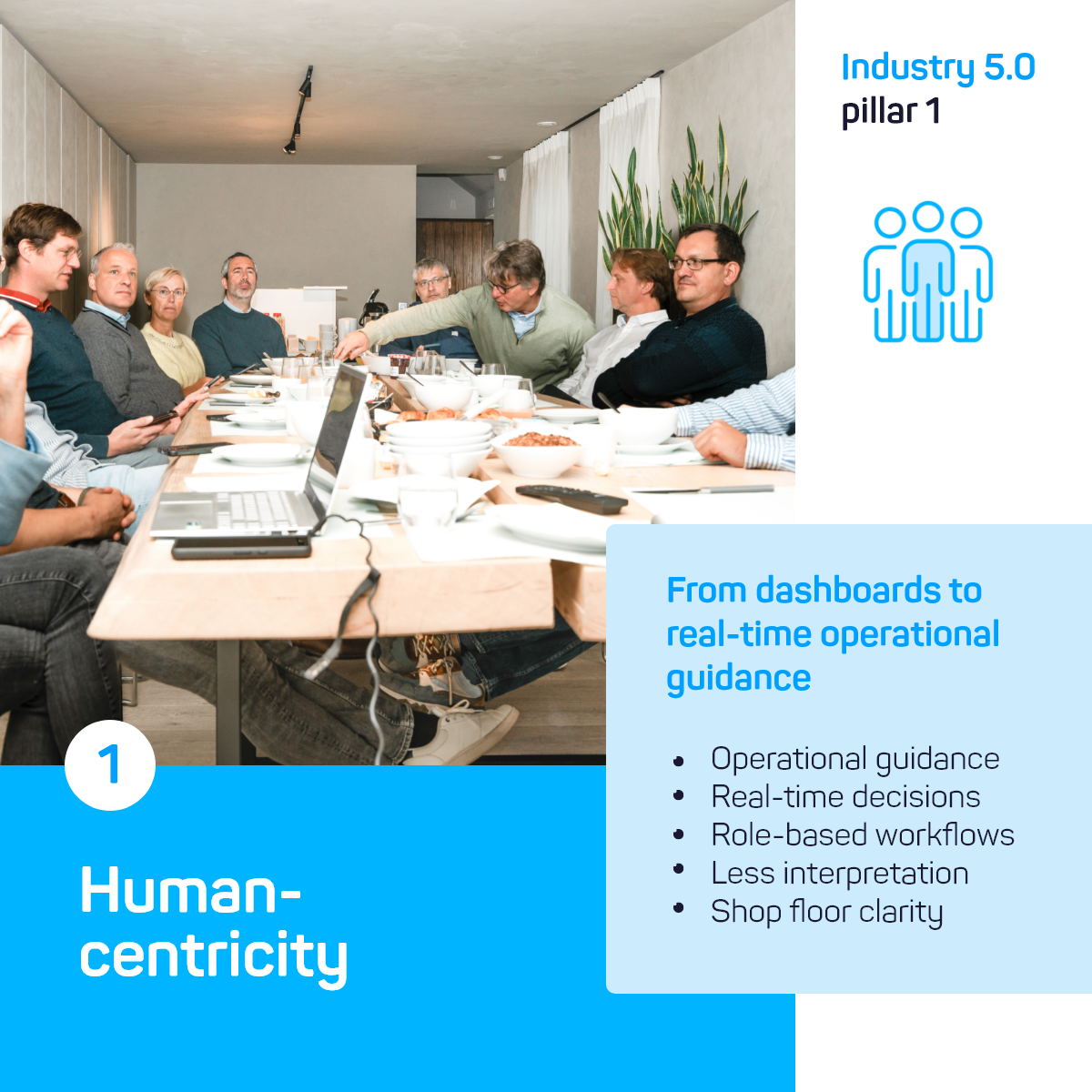
1. Human-centricity: from dashboards to operational guidance
Industry 5.0 puts people back at the center. But in most manufacturing environments today, operators and supervisors are still expected to interpret dashboards and draw their own conclusions — often under time pressure, with incomplete information.
The shift we see happening is clear:
From passive visibility (dashboards, after-the-fact reporting) To active guidance (real-time instructions, action-driven workflows, role-based interfaces)
Momentum gives operators clarity on what to do, when and why — without requiring them to dig through data. Supervisors get immediate insight into deviations and the actions needed to address them.
The result: faster decision-making, fewer errors and a workforce that feels supported rather than overwhelmed.
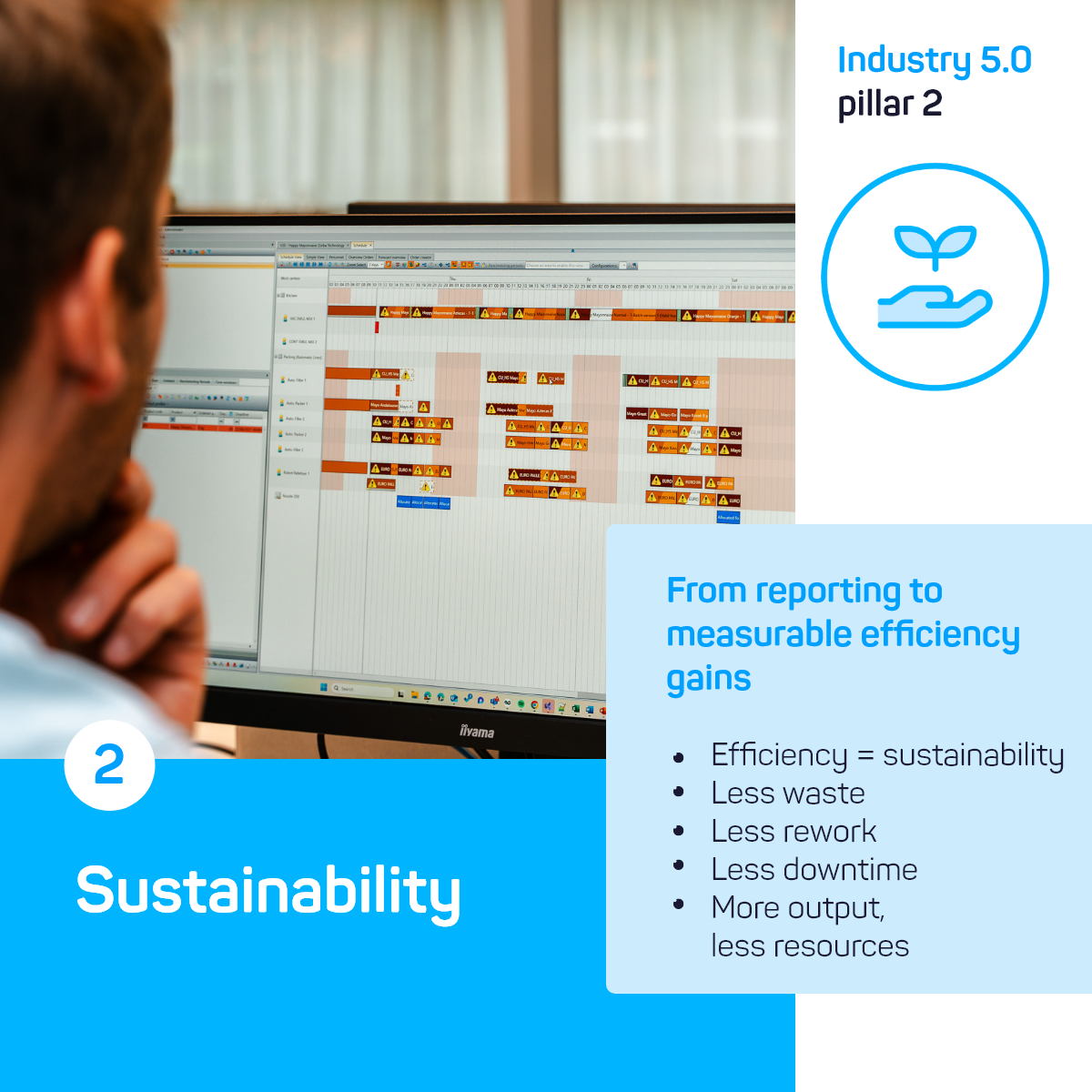
2. Sustainability: efficiency as the foundation for impact
Sustainability is often treated as a separate initiative — a reporting requirement or a branding effort. In reality, it is deeply connected to how well operations run day to day.
At Brighteye, we approach sustainability through execution. Not as "green technology," but as operational efficiency that directly reduces waste and resource consumption.
Momentum contributes to sustainability by:
- Reducing scrap through tighter quality control
- Cutting downtime through real-time insight and faster response
- Improving planning to eliminate unnecessary inefficiencies
- Minimizing rework across the production process
The impact is both financial and environmental: lower operational costs and measurable progress toward sustainability KPIs — driven by better execution, not separate programs.
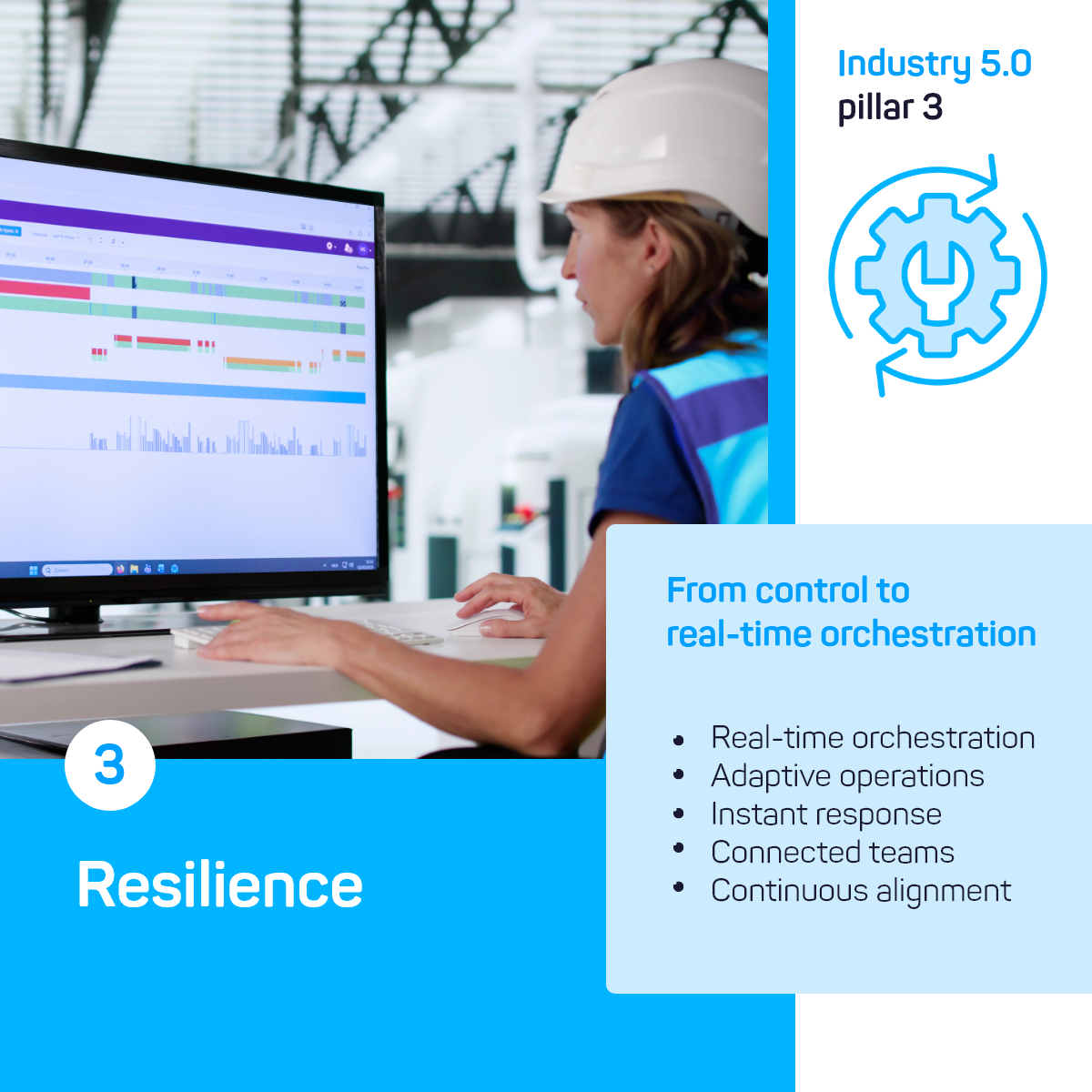
3. Resilience: orchestrating operations in real time
In manufacturing, change is constant. Machine issues, supply disruptions, last-minute adjustments — the ability to absorb and respond to these challenges is what separates high-performing operations from struggling ones.
Traditional systems are built for control: setting targets, monitoring performance, reporting deviations. But control alone isn't enough in dynamic environments. What's needed is orchestration — continuous, real-time alignment across planning, production and quality.
Momentum enables that alignment by:
- Providing immediate, structured responses to disruptions
- Creating continuous feedback loops between teams
- Supporting real-time decision-making at every level of the operation
The result is an operation that doesn't just track problems — it responds to them, faster and more consistently than before.
The real shift: from control to coordination
Industry 4.0 connected machines. Industry 5.0 connects people and processes.
But the underlying shift is deeper than that:
Industry 4.0 Industry 5.0
Control Coordination
Data Action
Systems Collaboration
This isn't about replacing what came before. It's about building on it — and adding the layer of human coordination that turns data into decisions.
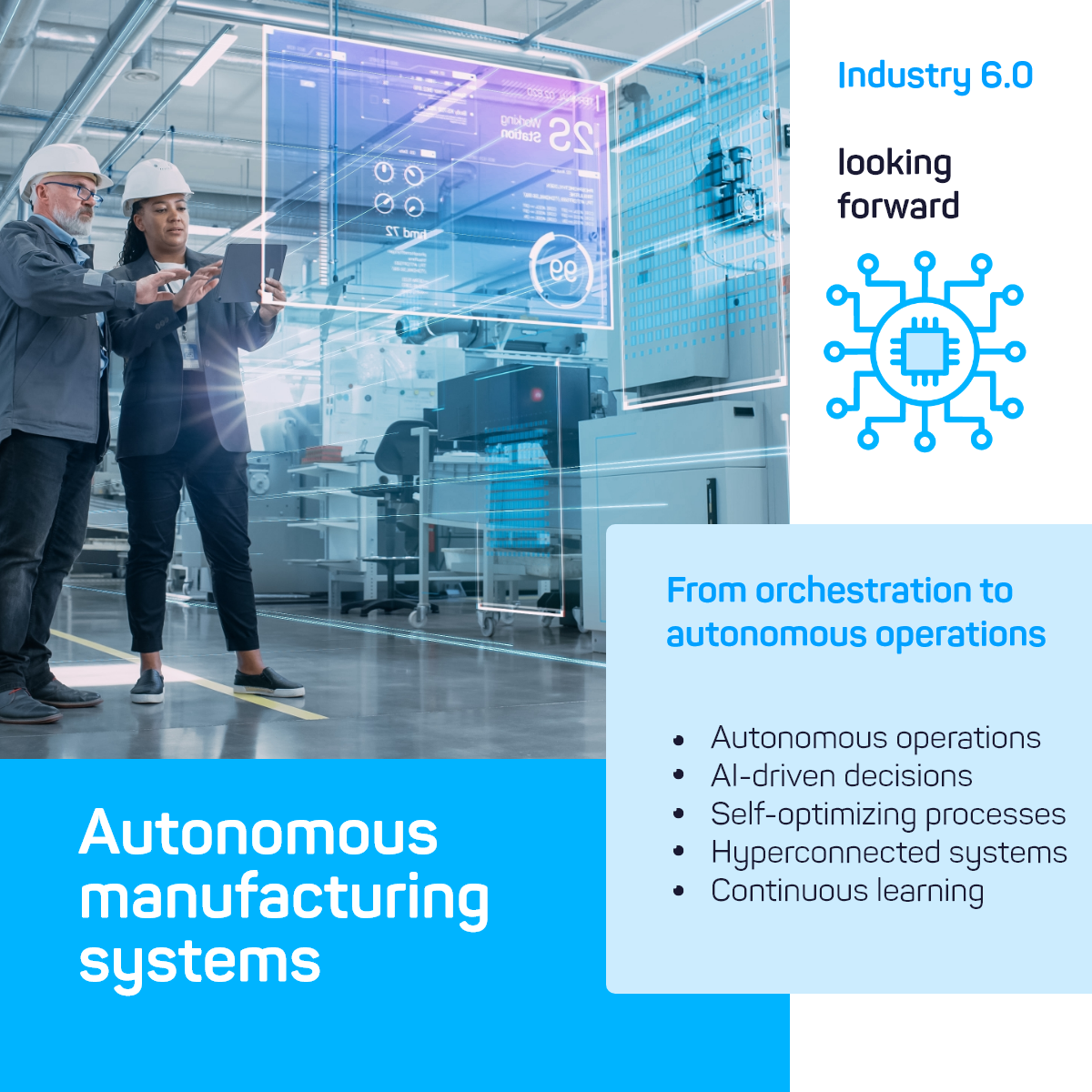
Looking ahead: the building blocks of Industry 6.0
Industry 6.0 is still taking shape. But several themes are already emerging: autonomous systems, hyperconnectivity, AI-driven decision-making and hyper-personalized production.
What's already clear is this: autonomy is only possible when operations are structured and orchestrated first.
AI can't optimize what isn't standardized. Autonomous systems can't coordinate what isn't connected. The foundation matters.
At Brighteye, we're building that foundation today:
- Structured, high-quality operational data
- Standardized, repeatable processes
- Real-time orchestration across teams and systems
This positions manufacturers not just for Industry 5.0 — but for whatever comes next.
Conclusion: complexity becomes manageable through orchestration
Industry 5.0 isn't about adding more technology. It's about making complexity manageable — by connecting people, processes and systems in a way that turns real-time information into real-time action.
That requires more than visibility. It requires orchestration.
At Brighteye, we believe this is where real transformation happens: on the shop floor, where decisions are made and operations come together. And as manufacturing continues to evolve, so does Momentum — continuously improving, adapting and preparing for what comes next.
Curious how Momentum can help your operation manage complexity and build resilience? Get in touch with our team.